
There has been a trend recently regarding people moving to more walkable cities. It’s evident if you live in area denoted as “walkable,” but even without anecdotal examples there’s evidence in the numbers. Looking to the National Association of Realtors (NAR) will show that a survey taken in 2023 described this exact phenomena. According to those polled, “79% said being within an easy walk of other places and things, such as shops and parks, is very/somewhat important. 78% of those indicated that they would be willing to pay more to live in a walkable community.”
The Issue
While I greatly appreciate the sentiments of people claiming they wish to live in such areas, I question how they determine what is walkable. Is it a claim made when they visited the tourist-y section of the city on their first trip there? Or, rather, did they use a resource similar to Walk Score?
Walk Score, if you are unaware, is a repository of fantastic data with a published methodology checked by those in the field of urban development to ensure their different scores accurately represent reality. They show scores in the categories of walkability, bikeability, and public transit. Although Walk Score is not the only player in this space, I believe they are the one quoted most often. So what is the issue?
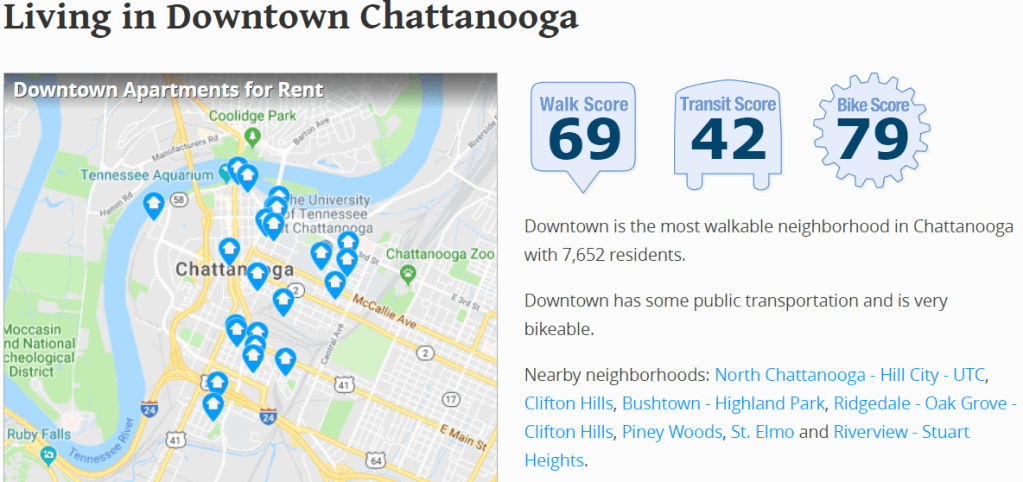
While I appreciate the scientific approach and advocate for the use of GIS, this often does not reflect reality. Anthropologists and sociologists would potentially object to this as well, noting that the human element is missing in the data. I.e. they do not survey the actual people that live within these communities or require their feedback. As someone who lives in a supposedly bikeable neighborhood in the city of Chattanooga, I can tell you that is rubbish. If you choose not to believe this, our pedestrian struck statistics as well as the Mayor’s response to these statistics (victim blaming) should be evidence enough. I do not hate our city or the mayor, and there are real warriors out there like Strong Towns and Jon Jon.
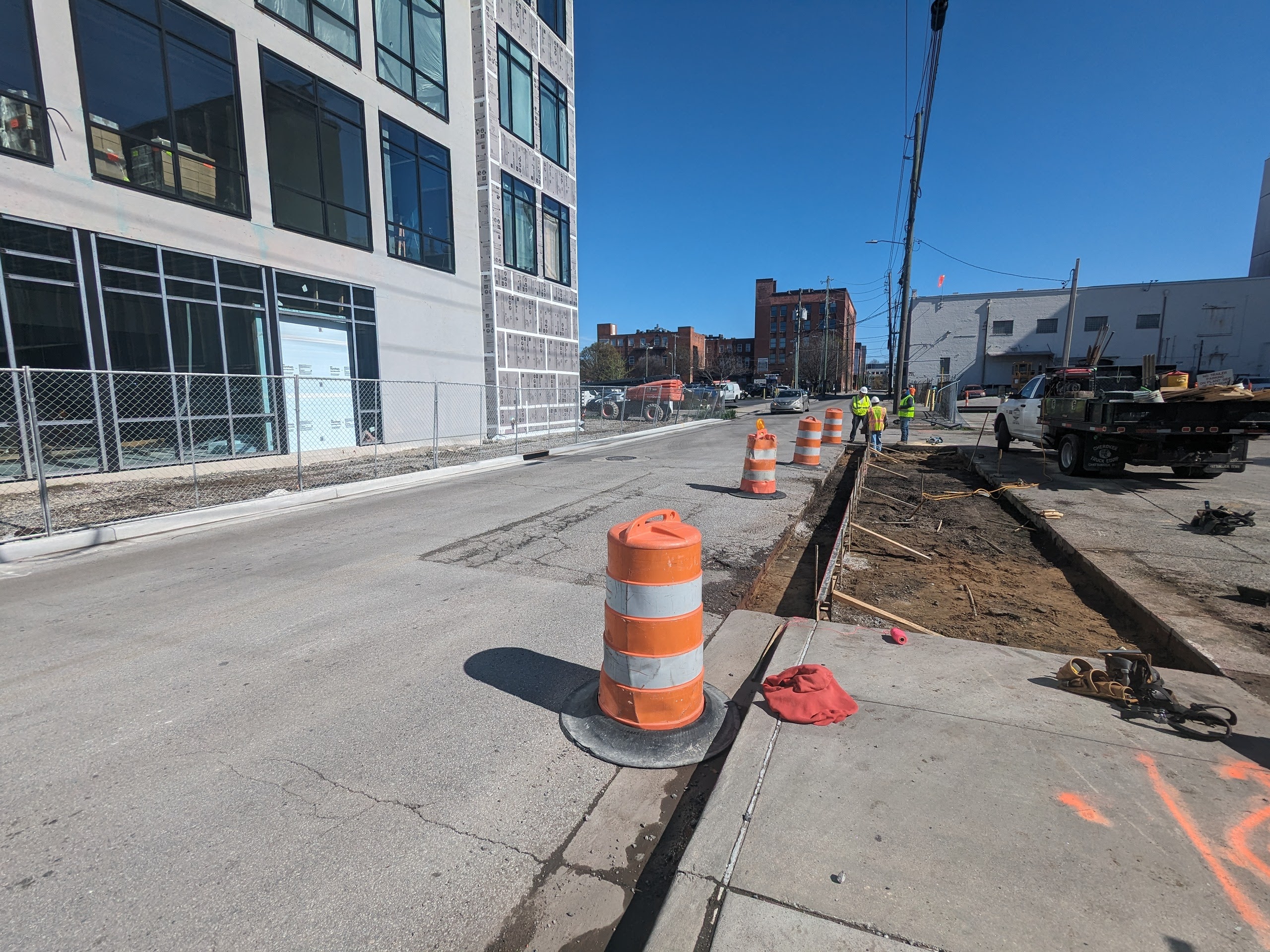
To claim that Downtown Chattanooga is bikeable, though, is a fallacy. A misbelief that is repeated across the nation due to the methodology of these scoring sites being too sterile. They lack the dynamics of human interaction within their town and therefore do not represent reality.
The Solution
First I would like to state I say all of this with love for my town. I do not even dislike the mayor. I just believe we are capable of better. That’s why I get so annoyed. The same is true for many other places in the US. I am aware this is due to laws, lobbying, and uncontrolled urban growth in that happened during an unprecedented time in human history. We can still strive for betterment.
The solution lies within that, I believe. The idea that we can all do our part to make the areas we live in a bit nicer. Attending neighborhood meetings, city council meetings, and voting in public elections. Educating both ourselves and our youth on our past so that we may learn from it rather than repeat it. For instance, let’s take a look at Chattanooga seventy years ago.

I will not say I can fix the issue singlehandedly or even know every step needed to be taken to do so. However, we can do something.
In environmental science there is this idea called the precautionary principle. The precautionary principle in basic terms is that when stakes are high, it is better to do something rather than nothing. I believe the same applies here. Human lives are in danger and claiming one thing when it is terribly untrue is indirectly causing more lives to be put at risk. This is not advocacy to stop biking or walking, but rather an attempt to make people aware of the situation we find ourselves in the US.
Perhaps a petition with potential solutions to Walk Score to help better gauge what is walkable is the answer here. I am unsure. If you have ideas or answers please let me know. Be safe, be well.
 SixR
SixR 

Leave a comment